
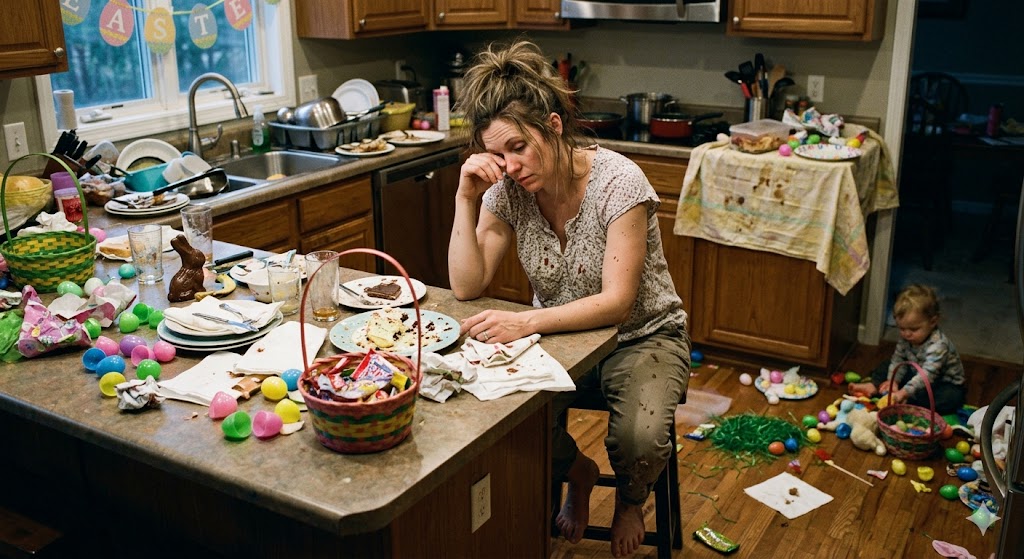
Easter has come and gone. The baskets are empty, the chocolate is rationed, and the rhythms of everyday life return. The golf clubs have found their way back into the trunk. The lawn mower is tuned up and ready to go. Vacation plans begin to take shape. Just like every other holiday, the excitement fades, and normal life resumes.
It’s easy for Easter to feel the same way—one meaningful Sunday followed by business as usual.
But the first week after Easter wasn’t business as usual for the disciples. What began with celebration at the Triumphal Entry turned into confusion, fear, and grief at the even more Triumphal Exit. Even after hearing the reports of the resurrection, they struggled to believe. The Gospels record multiple moments of doubt—times when the disciples couldn’t believe what they heard or even what they saw.
Why? And why do we sometimes struggle to believe today?
Some doubted because of the spreading of lies. The religious leaders paid the guards to say Jesus’ body had been stolen (Matthew 28:11–15). False stories clouded the truth. We live in a similar moment. Voices around us claim truth is relative – Your truth, My truth – everyone has their own version of reality. When truth becomes flexible, belief becomes optional, and confidence fades.
Others doubted because the events didn’t make sense. When the women reported the empty tomb, the disciples thought it sounded like nonsense (Luke 24:9–11). A resurrection didn’t fit their expectations. Today, we face the same tension. The supernatural doesn’t fit neatly into our categories. We struggle to believe God still transforms lives, intervenes, and works beyond what we can measure.
Still others doubted because of preconceived ideas. On the road to Emmaus, two followers explained that they had hoped Jesus would redeem Israel—but His death didn’t match their expectations (Luke 24:17–21). They believed in Jesus, just not the way He worked. We often do the same. We assume how God should act, and when He doesn’t follow our plan, doubt creeps in.
So what should our response be after Easter?
First, believe the truth claims of Jesus. He said He came to testify to the truth (John 18:37). Our foundation isn’t shifting opinion but the character of God. When we anchor ourselves in His truth, life gains purpose and direction. No matter the outcomes, the truth will set us free.
Second, don’t be taken captive by the world’s ideas. Scripture warns us not to conform to the pattern of this world but to be transformed by the renewing of our minds (Romans 12:2; Colossians 2:8). The way we guard against deception is by continually measuring our thinking against God’s Word. It is easy to fall into the trap of the enemy’s schemes. To begin to believe everything that continually scrolls past us. Renewing our mind is a constant, daily, activity.
Third, become lifelong learners of truth. Growth doesn’t stop at belief. God begins transforming us—reshaping our thinking, our desires, and our lives. Like a caterpillar becoming a butterfly, transformation involves struggle, surrender, and change. The old self gives way to something new as Christ forms us over time.
Another Easter has come and gone. The question isn’t whether we celebrated—it’s whether we believe. Are we trusting the truth of the resurrection? Are we growing in discernment? Are we allowing God to transform us?
Easter isn’t meant to be a moment. It’s the beginning of a life shaped by truth. Why would you seek the living among the dead? He has risen!

 Ted Harris - the Power of I